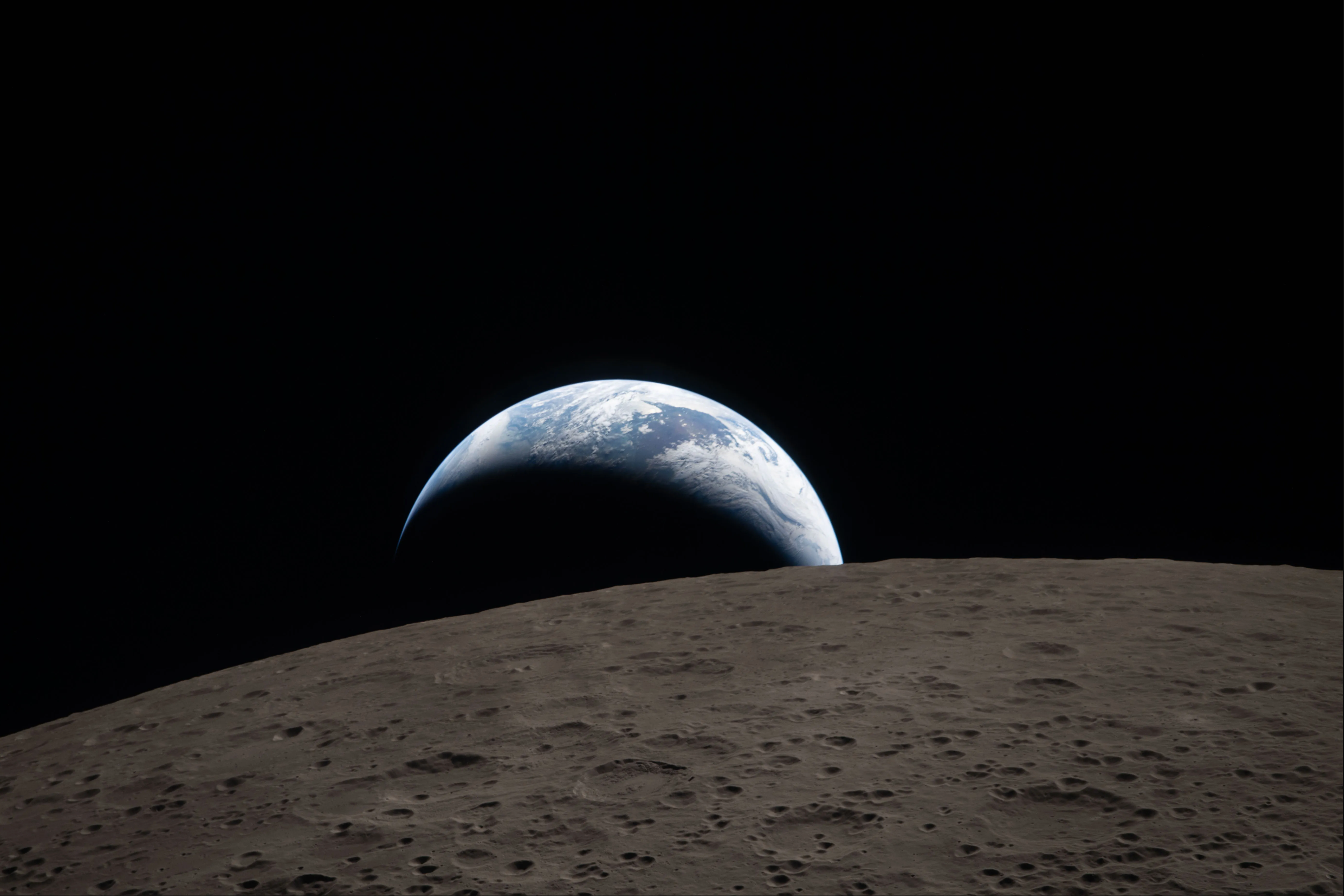
The second Artemis mission took four astronauts around the moon and back – the first crewed deep-space flight since 1972.
Not everyone gets a chance to put on a space suit, but you can still be an important part of NASA’s human space exploration story by doing NASA science
Volunteers with NASA’s citizen science projects have tested chili pepper plant varieties to grow in space, monitored active regions on the Sun, and analyzed data from experiments on how life adapts to the low-gravity, high-radiation environment of space.
Participation does not require citizenship in any particular country – you only need a love of science and a desire to help.
Join one of the projects below and help NASA make space travel safer and healthier.
Only a few minutes to spare?Space Umbrellais a great project for you.
The brief online project tutorial will teach you how to read data collected by NASA’s Magnetosphere Multiscale mission, which has been flying back and forth across Earth’s magnetosphere since 2015.
By sorting data into in-magnetosphere and out-of-magnetosphere readings, you will help scientists learn more about how solar storms interact with our magnetosphere.
Solar storms can pose a serious threat to astronauts, so this work can help missions minimize risks from radiation in space.
Are you aclassroom teacher for students in grades 6-12?ThroughGrowing Beyond Earth, middle and high school students and their teachers collaborate with Fairchild Botanical Garden scientists to grow candidate plants that are being evaluated as astronaut food.
Today, on the International Space Station, astronauts tend to some of the same experimental leafy greens and hot pepper plants to unlock the secrets of how best to space farm terrestrial species.
On really long missions, it won’t just be a question of easing the monotony of packaged/prepared foods – astronauts will have to grow their own food to supplement their diets.Sign up hereto learn more.
Do you have some experience with data analysis?TheOpen Science Data Repository Analysis Working Groupsneed you to help analyze data from experiments about life in space.
Join this international community of scientists, students, and everyone in between to help us understand how terrestrial life – from plants to mice and microbes to astronauts – responds to the space environment.
Into ham radio?Join the team calledHam Radio Science Citizen Investigation and use your ham radio skills to deploy your own personal space weather station
These stations are designed to be relatively low cost and easy to build and deploy by science professionals, educational institutions, and citizen scientists.
Your observations will be aggregated into a central database to help answer questions about how the ionosphere responds to the Sun and the neutral atmosphere.
These NASA science projects below are open to everyone.
Citizen Science
As NASA’s Artemis II astronauts zipped around the Moon in early April, they observed flashes…
Scientists are working to understand exactly how these waves behave, and the team behind NASA’s…