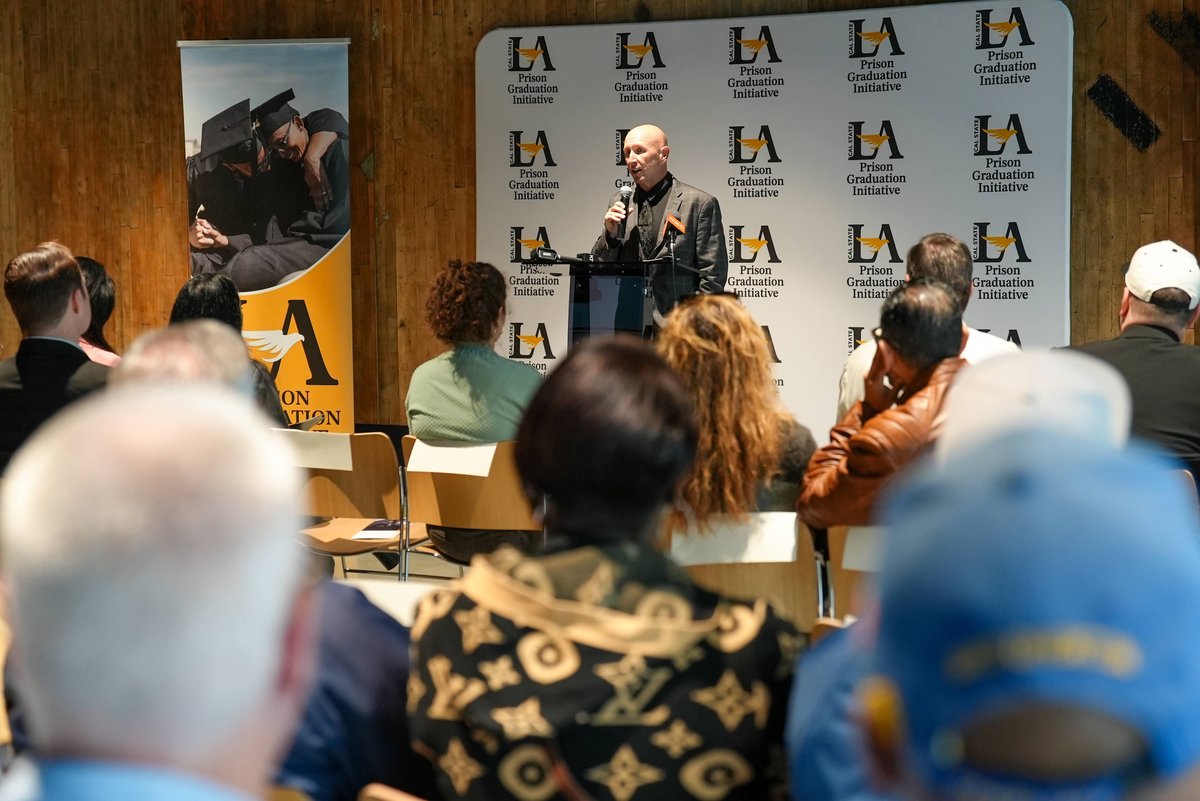
California State University, Los Angeles has launched a bachelor's degree program at San Quentin Rehabilitation Center, with an inaugural cohort of 34 students now pursuing a Liberal Studies degree, the state announced.
The 21-month program is part of California's broader effort to expand higher education opportunities across its correctional system. It brings university instruction into a newly opened Learning Center at the prison.
The Learning Center, which opened in May 2026, currently serves 432 adult basic and secondary education students alongside 495 college students. Library book checkouts have increased 400 percent since the space opened, the state said.
California's Department of Corrections and Rehabilitation operates higher education programs at 12 institutions through partnerships with the California State University and University of California systems. As of 2026, the state reported 9,966 associate degrees, 451 bachelor's degrees, and 48 master's degrees awarded to incarcerated individuals. Community college courses are offered through in-person instruction, distance learning, and correspondence.
Education appears to improve outcomes after release. According to state data, 81.5 percent of people who earned Rehabilitation Achievement Credits remained conviction-free three years after release. The same rate for those who earned Educational Merit Credits was 76.7 percent, compared to 66.7 percent for those who participated in general rehabilitative programming. Separately, the state found that incarcerated people who took college courses were 31 percent more likely to have jobs after release.
California's most recent statewide crime data show declines across major categories in 2025 compared with 2024: homicide down 18.6 percent, robbery down 19.9 percent, property crime down 14.3 percent, and motor vehicle theft down 25.8 percent. Since Governor Gavin Newsom took office, homicide is down 20 percent overall and robbery is down 31 percent.
"The majority of people who enter prison eventually go back once they've served their time, so it is deeply important that those individuals leave being better prepared to positively contribute to their community," Newsom said in a statement about the program launch.