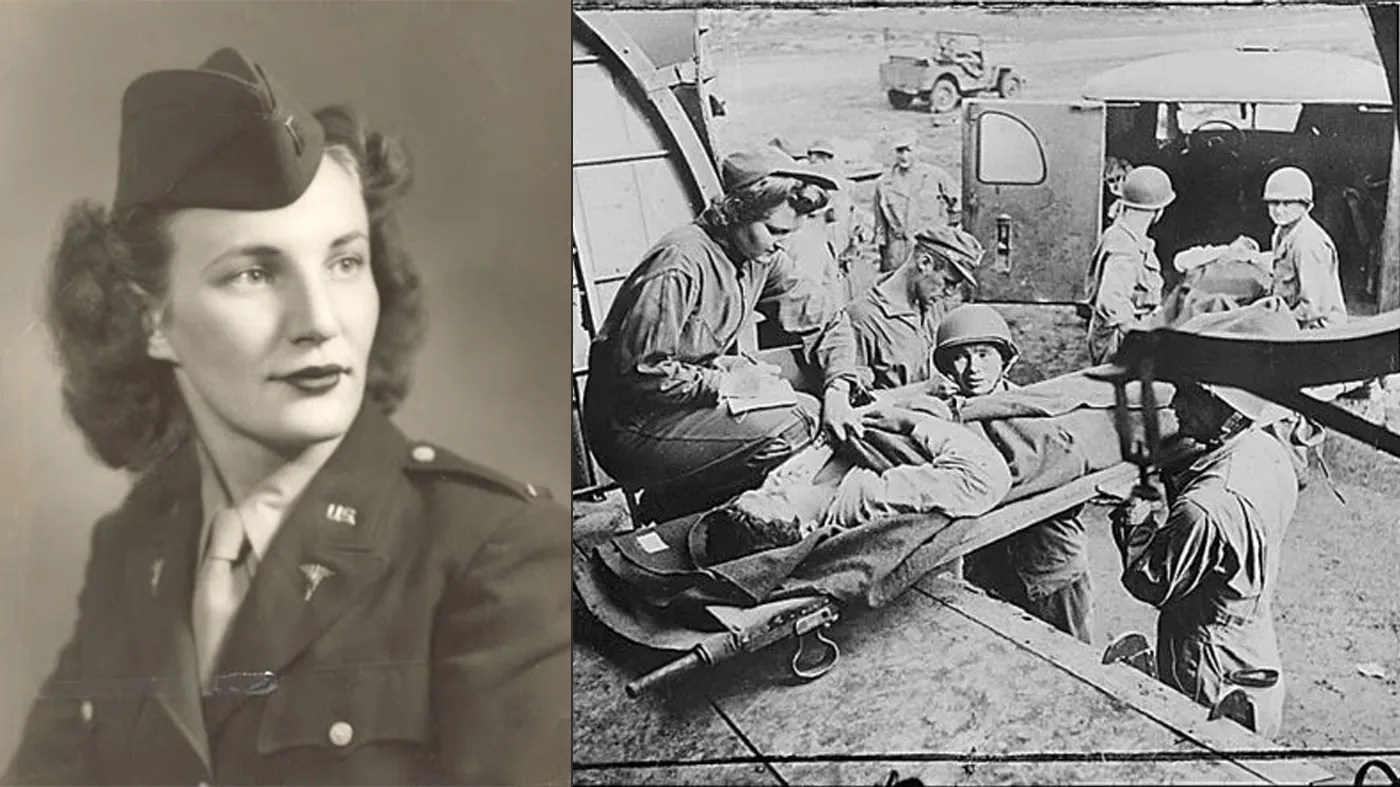
When wounded service members needed faster transport home during World War II, one Army nurse helped prove that the skies could become a lifeline.
Elsie S.
Ott made history in 1943 as the first woman to receive the Air Medal, forever changing military medicine in the process.
In January 1943, while stationed in Karachi, India, Ott was given just 24 hours’ notice: she would escort five seriously ill and wounded soldiers on what would become the first intercontinental aeromedical evacuation flight to the United States.
There was one complication: She had never flown before.
The journey, which would have taken three months by sea, lasted roughly a week by air.
Along the way, Ott cared for patients suffering from paralysis, tuberculosis and psychiatric illness, managing their conditions mid-flight across multiple continents and refueling stops before arriving at Walter Reed Hospital in Washington, D.C.
Despite minimal supplies and no formal flight nurse training, Ott documented everything, from oxygen needs to cabin temperature concerns, creating practical guidance that would shape future aeromedical protocols.
On March 26, 1943, Ott became the first woman in Army history to receive the Air Medal for her actions during the aerial mission.
The recognition signaled a turning point not only for women in uniform, but for military medicine itself.
Her mission demonstrated that air evacuation was not only possible, it was superior.
The success of that flight accelerated development of a formal flight nurse program within the Army Air Forces, laying the groundwork for modern aeromedical evacuation systems used by both the military and civilian sectors today.
Ott’s mission proved that air evacuation could save time, and lives.
Following her historic flight, Ott completed formal flight nurse training and continued serving overseas. She eventually rose to the rank of captain before leaving active duty in 1946.
In 1965, the first military aircraft specifically designed for medical evacuation, the McDonnell Douglas C-9 Nightingale, was named in her honor, recognizing her foundational role in aeromedical transport.
Today, every medevac flight that transports injured service members follows the standards first tested under her care.
As we recognize pioneers in military and Veterans healthcare, Ott’s story reminds us that progress often begins with one person willing to step into the unknown, even if it means boarding a plane for the very first time.
Learn more about the history of Veteran care , and the women whose compassion, leadership and advocacy shaped it at every level.
History medical innovation Women's History