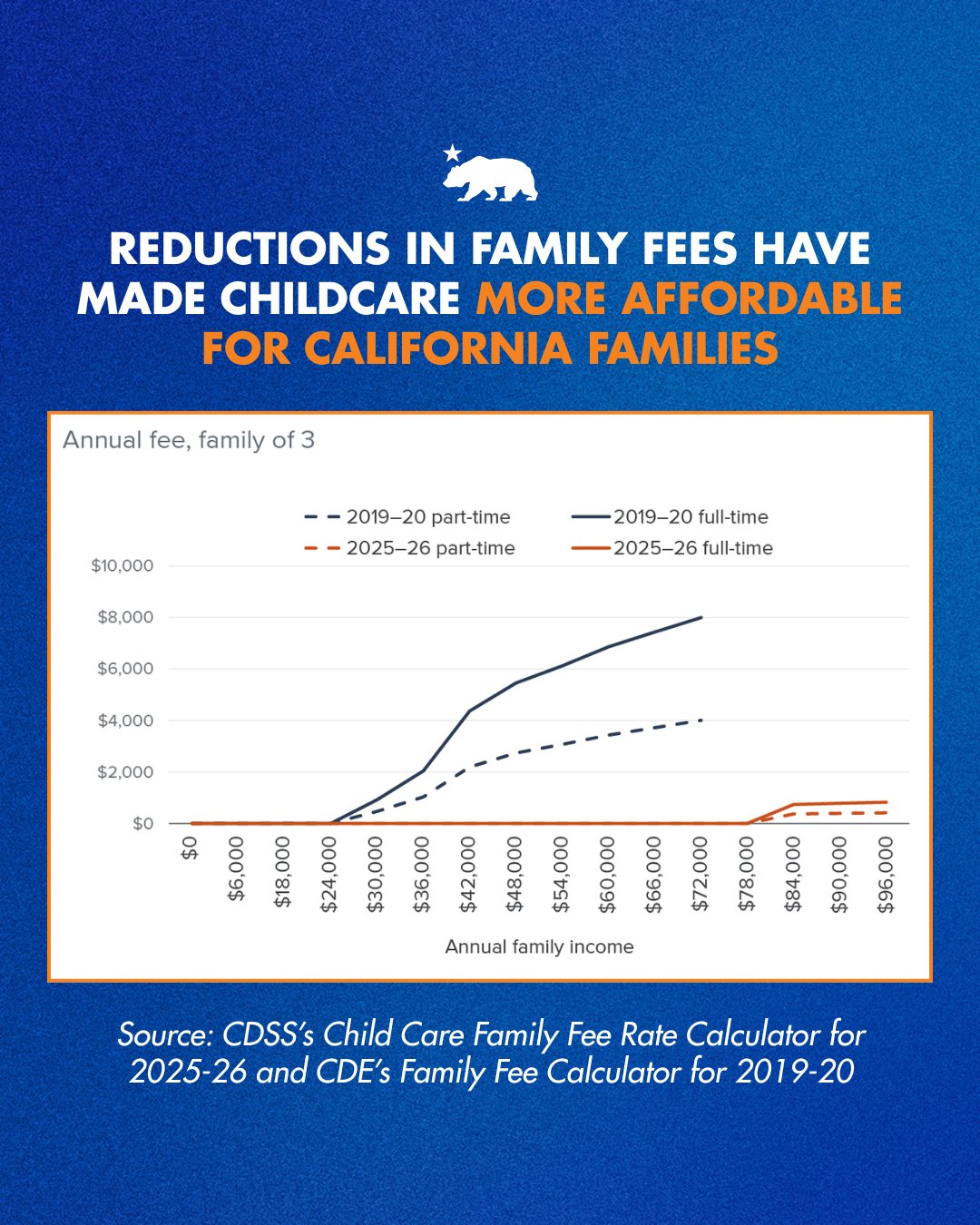
Governor Gavin Newsom cited a report from the Public Policy Institute of California showing that childcare costs have fallen significantly since 2019, when his administration began implementing a slate of programs aimed at making it more affordable to raise children.
According to the PPIC analysis, a California family of three earning $60,000 annually would pay $0 in fees for subsidized childcare in 2025–26, down from roughly $7,000 in 2019–20 when adjusted for inflation.
California expanded subsidized childcare capacity, adding approximately 149,000 subsidized childcare slots since 2019 and providing 3,800 grants to childcare providers to improve facilities. The state also created Transitional Kindergarten, a free pre-K program now available to all four-year-olds.
During the 2025–26 school year, 213,313 children enrolled in Transitional Kindergarten. State researchers found that students who attended the program entered kindergarten approximately six months ahead in letter-word skills and three months ahead in applied mathematics. California has invested $12.5 billion since 2019 to fully implement the childcare and early education programs.
Beyond reducing childcare costs, the state expanded paid family leave to eight weeks with increased wage replacement for workers earning less than $65,000, bringing replacements to up to 90% of regular wages. California also began serving free breakfast and lunch to all public school students, providing 3.5 billion meals since the program began.
The state supported childcare workers by helping approximately 40,000 family childcare providers unionize and committing more than $800 million to support union members' health, retirement, and training benefits.