Discover the cosmosEach day a different image or photograph of our fascinating universe is featured, along with a brief explanation written by a professional astronomer.
Explanation:Scientists are melting holes in the bottom of the world.
In fact, almost 100 holes melted near the South Poleare now being used as an astronomical observatory.
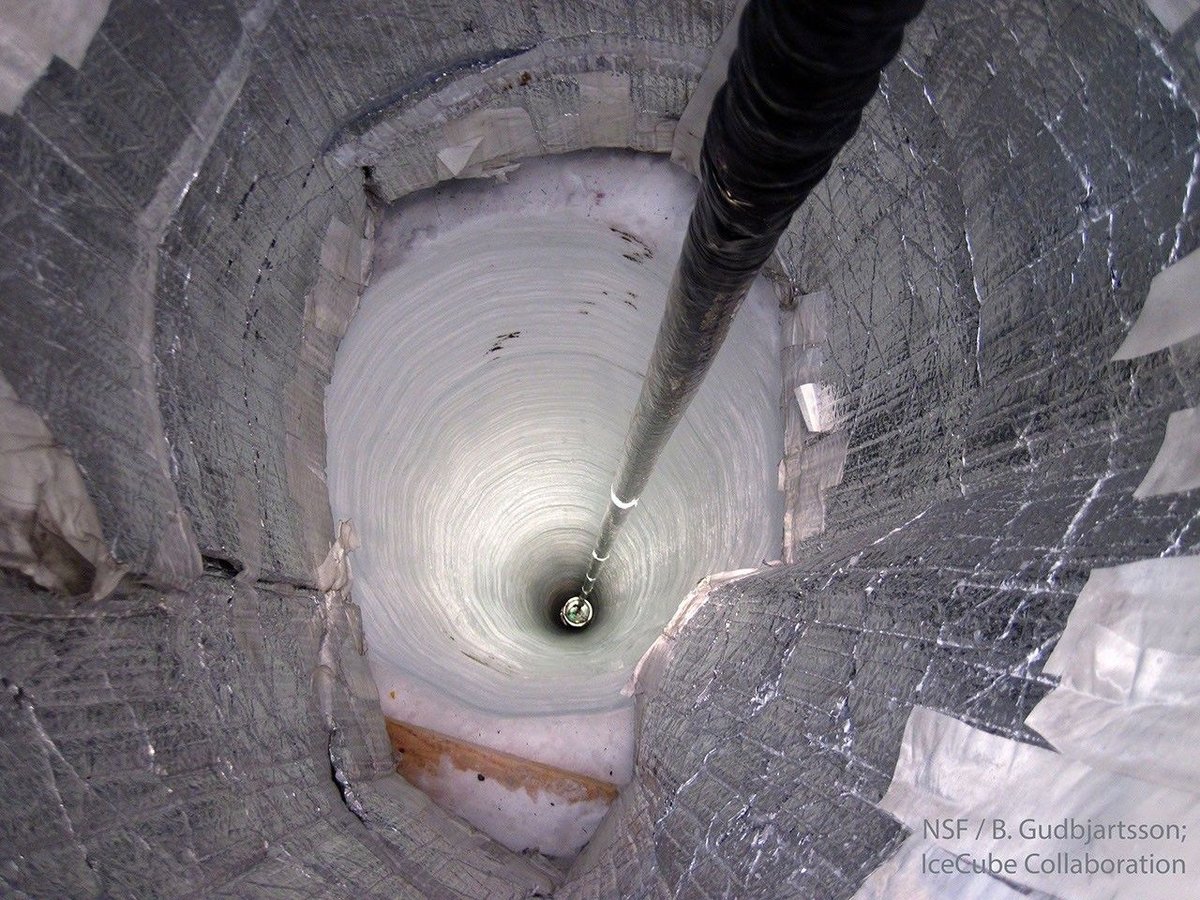
Astronomers with the IceCube Neutrino Observatorylowered a long string knotted with basketball-sized light detectors into each vertical lake.
The water in each hole soon refreezes.
The detectors attached to the strings are sensitive toblue lightemitted in the surroundingclear ice.
Such light results from fast-movingsecondary particlesliberated when high-energyneutrinosemitted bypowerful processesout in the universe collide with ice molecules.IceCubehas now detected many illuminating neutrinos.
Pictured in 2010, one of the last of IceCube’sdetector stringsis lowered into thefreezing abyss, making IceCube the largestneutrino detectorever created.
In recognition ofunprecedented discoveries, it was announced earlier this week thata founding leaderof the IceCube Collaborationwill be awarded the Nobel Prize in Physics.
Tomorrow’s picture:Moons Planet