Sept. 29, 2026
After spending the last six months exploring “Lac de Charmes,” a region of ancient rock beyond Jezero crater’s western rim, Perseverance has stumbled upon a vast field of light-toned rocks peppering the Martian surface.
Light-colored rocks are astrange sight on Mars, a planet dominated by dark-colored basaltic rocks.
This many light-colored rocks in one place piqued the Science Team’s interest… what are they?
How did they get here?
To answer the first question, Perseverance has been investigating the composition and textures of these rocks.
Data so far indicates that many of them are igneous rocks called gabbro, which are dominated by minerals rich in iron and magnesium.
Such rocks typically form by slow cooling and crystallization of magma deep in the crust.
So how did these deep fragments of Mars find their way to the surface?
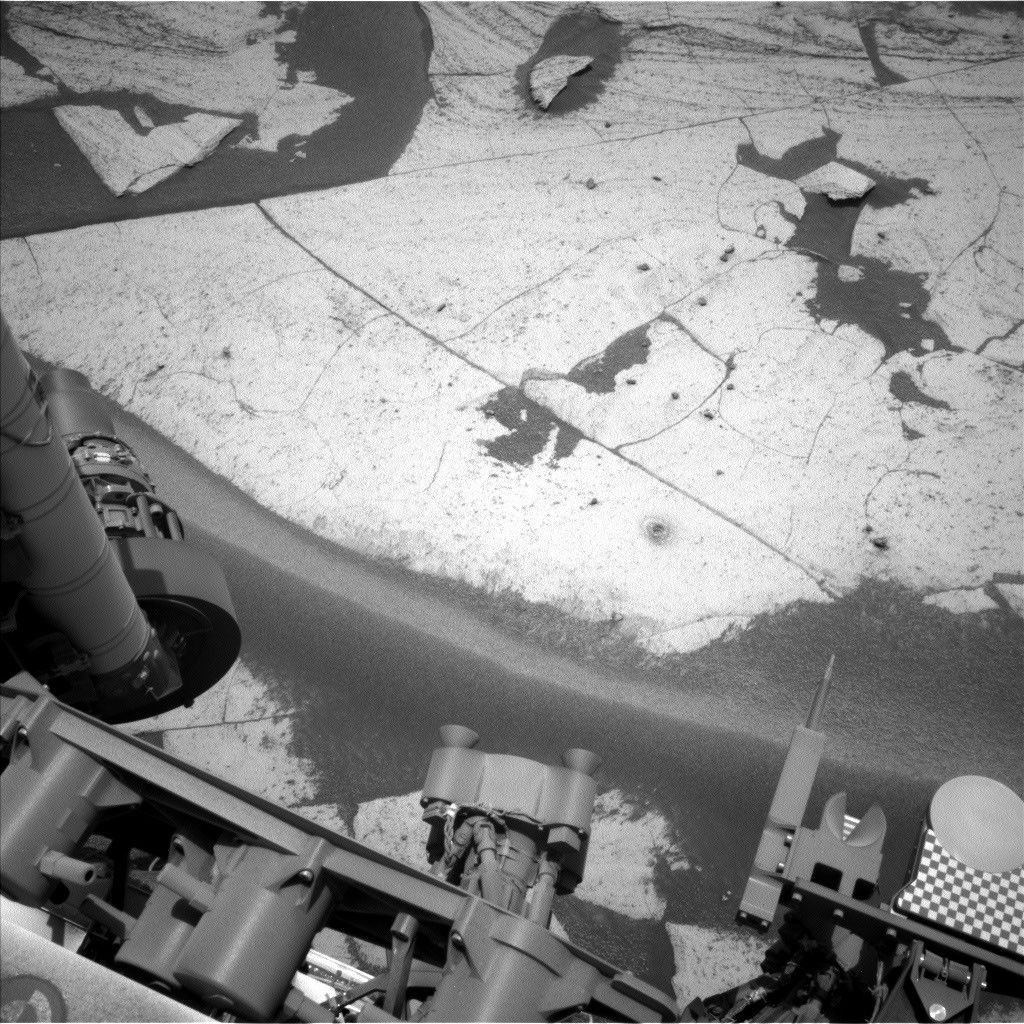
Perseverance has spent the last week trying to answer this question by investigating a patch of possible bedrock poking out between the light-toned boulders and loose regolith.
Initial images suggest that the rock is made up of light- and dark-colored, angular fragments of rock, forming what geologists call a breccia.
One possibility the team is investigating is that the light-toned boulders scattered across the hillside have eroded out of this breccia.
Breccias often form through violent processes involving the fracturing and transport of rock to produce their angular shapes.
Layers of breccia observed outside Jezero have previously been attributed toasteroid impacts on early Mars.
Perhaps similar impacts could be responsible for digging up these light-colored blocks.
Only time, will tell.
Want to read more posts from the Perseverance team?Visit Mission Updates
Visit Mission Updates
Want to learn more about Perseverance’s science instruments?Visit the Science Instruments page
Visit the Science Instruments page
Explore this collection of Mars images, videos, resources, PDFs, and toolkits. Discover valuable content designed to inform, educate, and inspire,…
Each robotic explorer sent to the Red Planet has its own unique capabilities driven by science. Many attributes of a…
The key to understanding the past, present or future potential for life on Mars can be found in NASA’s four…
The Mars Perseverance rover is the first leg the Mars Sample Return Campaign’s interplanetary relay team. Its job is to…