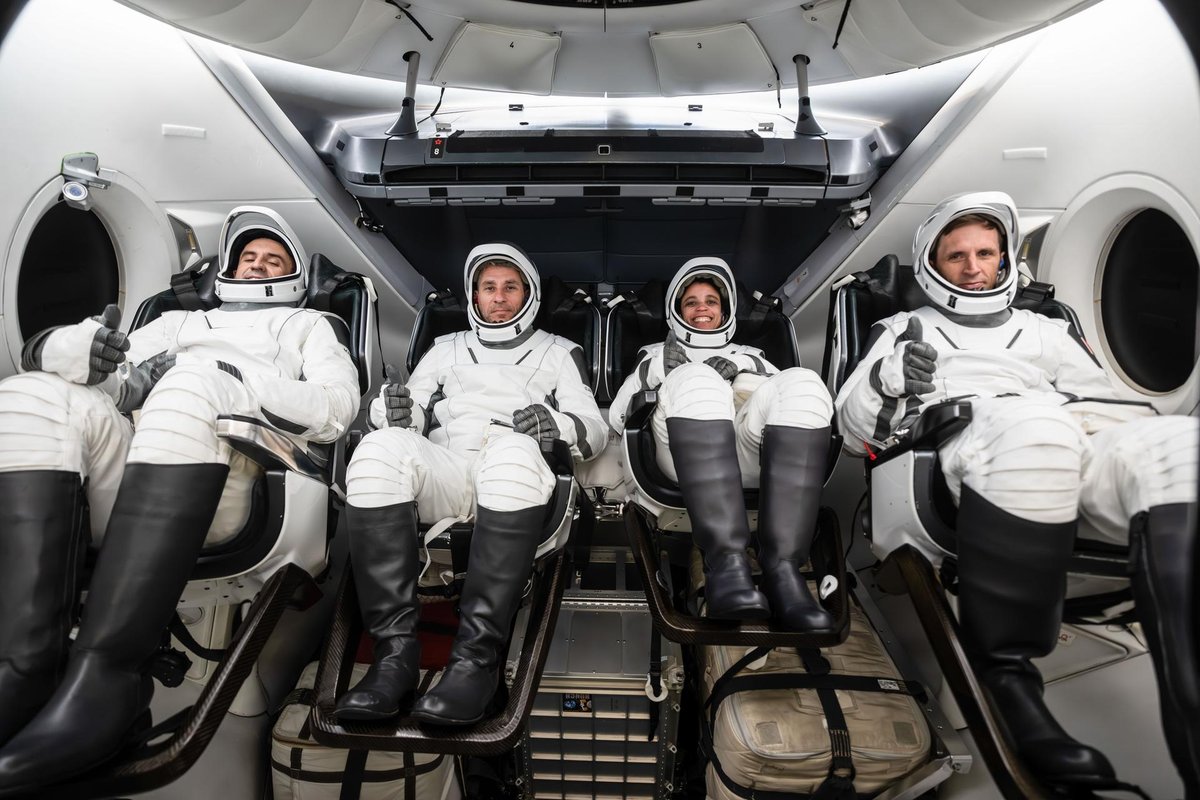
Astronauts aboard the SpaceX Crew-13 mission to the International Space Station will participate in a series of biomedical and human performance studies, NASA announced.
Among the investigations is a new collaboration with the European Space Agency called Venous Haemostasis, which focuses on how spaceflight affects blood flow and clotting. Researchers will coordinate blood collections and other physiological data from multiple space agencies to study how weightlessness disrupts normal blood flow in astronauts' veins, which can increase blood clot risk.
"In space, weightlessness can disrupt normal blood flow in astronauts' veins," said Jason Lytle, a cardiovascular researcher at NASA's Johnson Space Center in Houston. "Irregular and slow blood flow can increase the risk of blood clot formation, a serious health condition. Venous Haemostasis will help us understand why these changes may occur in some astronauts but not others."
Astronauts will undergo MRI scans, jugular vein ultrasounds, blood pressure checks, and blood draws before, during, and after flight, allowing researchers to track changes in blood flow and composition.
Other investigations include a study of manual piloting skills using lunar-landing simulations to evaluate how spaceflight affects astronauts' ability to handle challenging landings. NASA is also continuing a study of B-vitamin supplements to determine whether they can reduce or prevent Spaceflight-Associated Neuro-ocular Syndrome (SANS), a condition that can change astronauts' eye structure during long missions.
Additional studies will track exercise routines, establish health baselines, characterize forces experienced during landing, and measure other health and performance metrics.