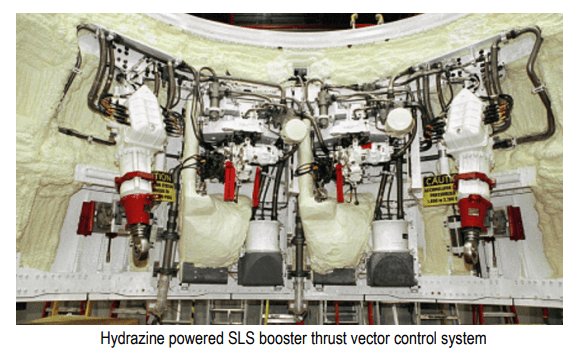
NASA has issued a technical bulletin identifying risks from freeze-thaw cycles in hydrazine monopropellant systems used in spacecraft. Hydrazine freezes near 1.6°C, and the phase transition poses structural, operational, and safety hazards to flight hardware.
Multiple NASA programs have encountered problems related to hydrazine freezing. Space Shuttle auxiliary power unit (APU) hydrazine lines were vulnerable to freeze-induced contraction followed by thaw-induced over-expansion, capable of rupturing plumbing. Shuttle flight rules allowed no more than two freeze-thaw cycles before deeming the system degraded or failed. Voyager spacecraft propulsion systems faced mission-threatening scenarios as hydrazine temperatures approached freezing.
The freeze-thaw cycle creates several critical risks, according to the bulletin. Contraction during freezing allows additional propellant into confined lines, producing conditions that rupture lines or fittings during thawing. Elastomeric seals and valve components may crack or lose sealing capability. Partially thawed hydrazine can form slush, restricting flow and altering propellant delivery rates. Freeze-related damage may allow hydrazine to leak, creating toxicity and crew exposure hazards. Systems exposed to freeze-thaw cycles become life-limited, reducing mission availability.
NASA recommends maintaining hydrazine above freezing using heaters, insulation, blankets, or warm gas purge, with uncertainty analysis included in thermal modeling and testing. Components should remain in environmentally controlled conditions until installation in spacecraft.
If freezing occurs, NASA recommends suspending system use until engineering evaluation is completed, assessing the number of freeze-thaw cycles, and conducting integrity verification through pressure tests and valve assessments. Hardware should be warmed gradually and evenly to prevent over-pressure damage during thawing.
The bulletin also recommends using high-fidelity thermal modeling to guide monitoring of key line temperatures on flight systems, rather than relying solely on bulk tank or plate temperatures. All freeze exposures should be recorded as reportable anomalies, with engineering assessment and hardware life reduction tracked accordingly.