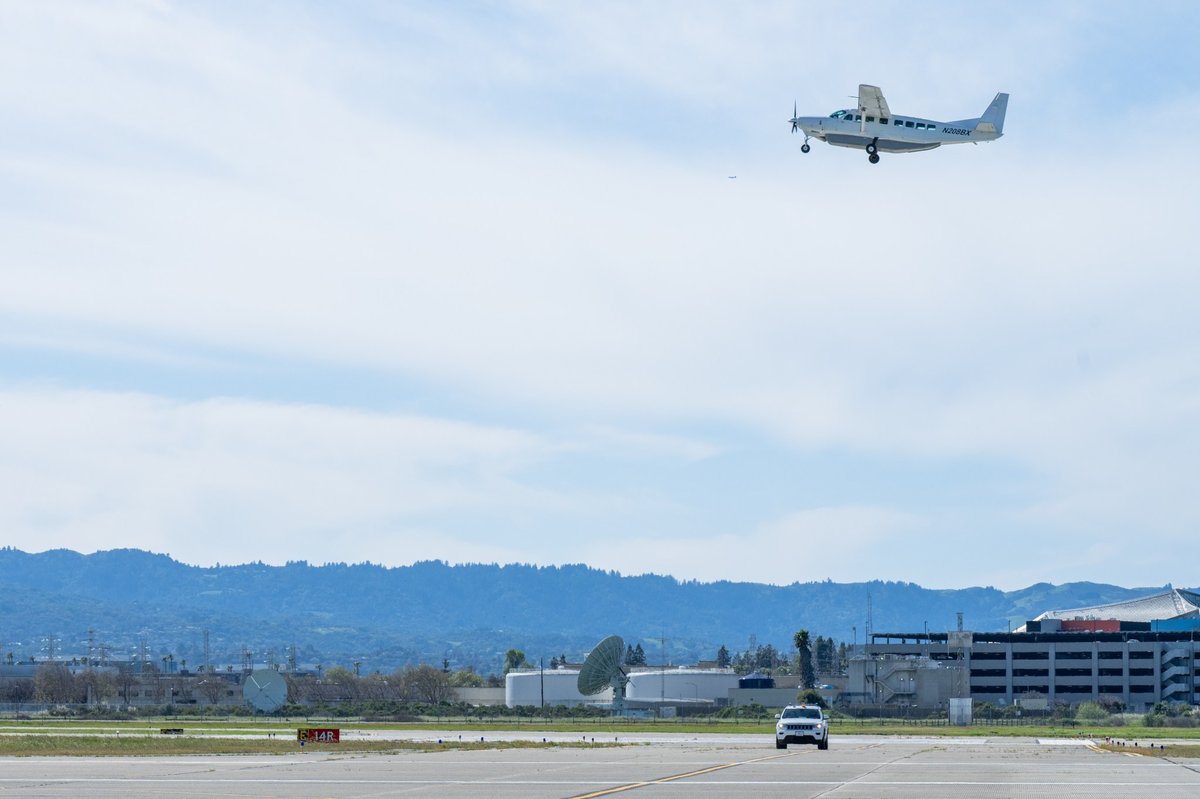
Researchers at NASA's Ames Research Center and Boeing recently conducted field tests of digital taxi guidance and runway safety systems to evaluate their potential to improve airport operations.
The tests examined three systems: digital taxi information, safe taxiway technology, and safe runway technology. In digital taxi trials, pilots received guidance directly on cockpit displays or tablets instead of verbal instructions from air traffic controllers. According to NASA, the system reduced pilot and air traffic controller workloads and the risk of verbal errors.
Safe runway technology uses sensors to detect vehicles or other aircraft on the runway. During testing, sensors flagged a vehicle on a runway as a Boeing aircraft was preparing to land, providing pilots with additional awareness to avoid potential collisions or safety hazards.
"Aviation safety is key to NASA's research," said Parimal Kopardekar, director of NASA's Airspace Operations and Safety project. "Technology that can provide additional autonomy and support a future airspace with multiple aircraft operating in harmony is key to advancing the National Airspace System."
NASA also tested real-time trajectory sharing with commercial flights. In a 2025 collaborative effort with Boeing, United Airlines, and international partners, a United Airlines Boeing 737 shared frequent flight information with airline operations centers and air traffic control. The data helped researchers understand how often updates should be sent and what information matters most for accurate arrival predictions. Better data allows air traffic controllers to sequence traffic more precisely, reducing holding patterns and enabling more direct descents.
The agency has developed pre-departure rerouting technology and digital exchange tools that let dispatchers and controllers see the same digital picture of flights preparing to depart. When a better route becomes available, controllers can coordinate changes digitally instead of relying on verbal communication. NASA has transferred this routing technology to the Federal Aviation Administration, and airlines continue to test it.