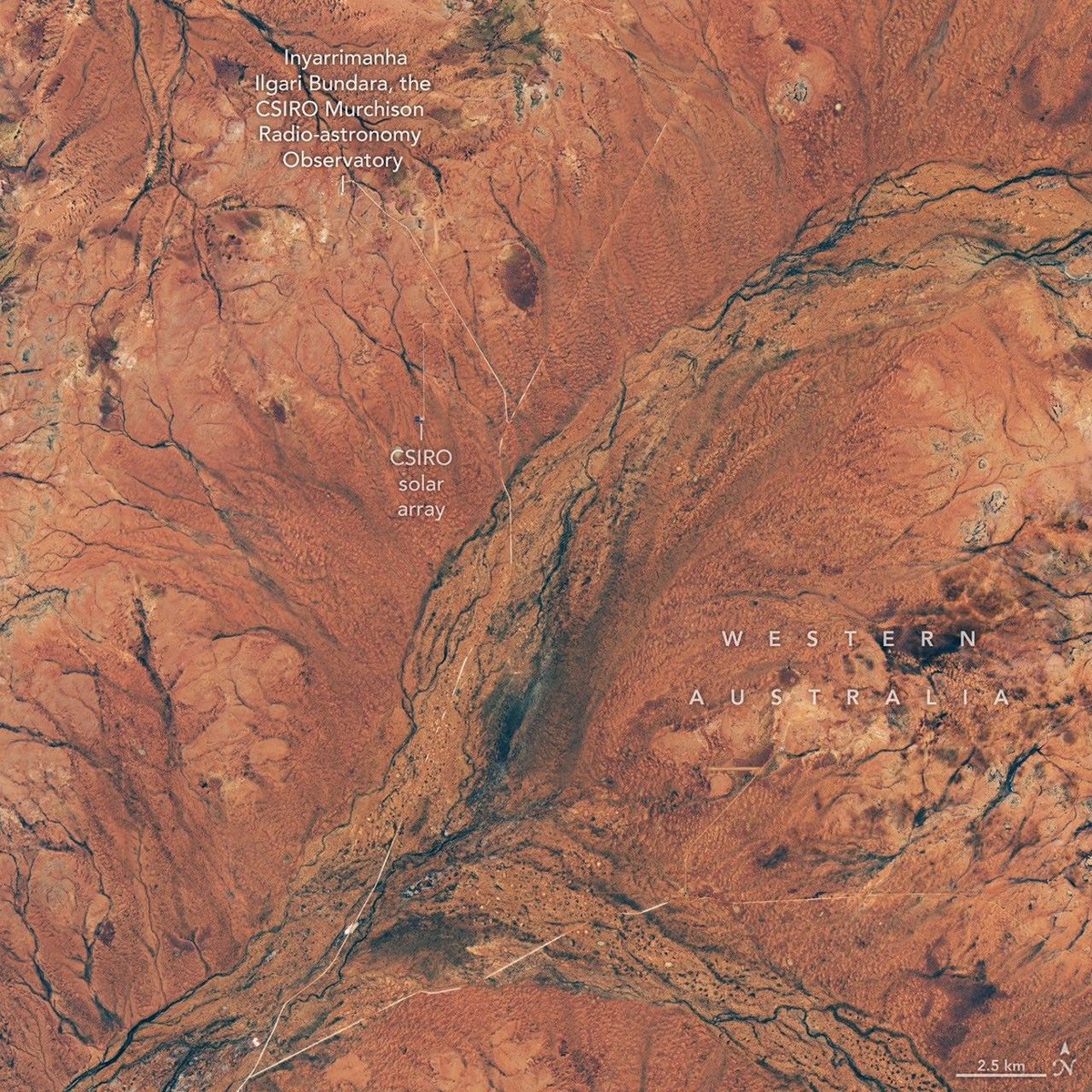
Above-average rainfall through 2026 triggered a massive wildflower bloom across the Murchison region of Western Australia, roughly 600 kilometers north of Perth. Local experts think the display could be the most extensive the area has seen in nearly two decades, according to NASA's Earth Observatory. The region, one of Western Australia's main areas for grazing sheep and cattle, typically sees wildflowers only occasionally.
Rain totals were above average in June and very much above average in August 2026, brought by several cold fronts moving through the area, according to Australia's Bureau of Meteorology. The moisture awoke dormant seeds in the soil, creating carpets of blooms across the arid shrublands. The display included threatened species that the Commonwealth Scientific and Industrial Research Organisation, or CSIRO, has monitored on its land.
The blooming landscape was captured by NASA's Landsat 8 satellite in late August 2026, with satellite images compared to similar observations from the same time in 2025, showing the enhanced vegetation and color brought by the exceptional rainfall.