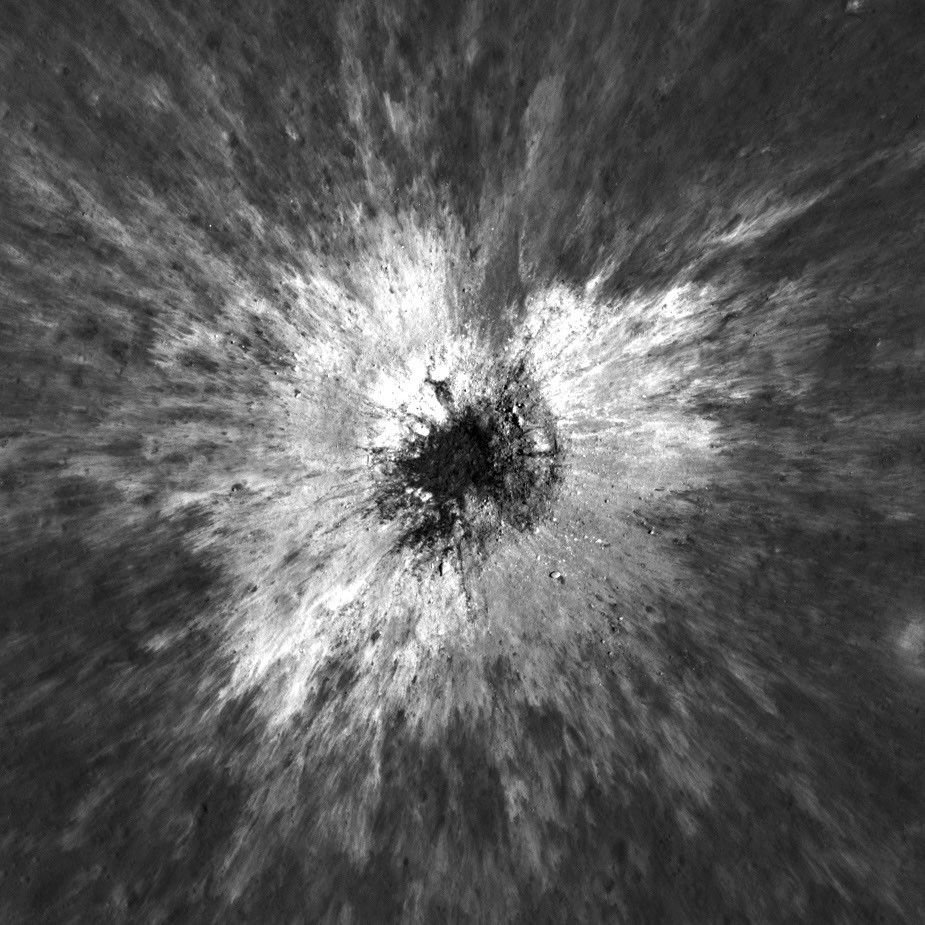
A comet or asteroid roughly the size of a humpback whale struck the moon between April and May of 2024, creating a new crater that NASA's Lunar Reconnaissance Orbiter captured in before-and-after images. The crater, named McGetchin after an Apollo-era lunar scientist, stretches roughly two soccer fields across, making it the kind of impact that the agency expects to occur only once every 132 years.
Thermal imaging of the impact site revealed a large cold spot surrounding the warm crater. The strike compressed loose lunar sediment, known as regolith, making it less dense and harder to retain heat. The area affected by the impact extended significantly beyond the visible crater itself.
The discovery provides new information about how large impacts reshape the moon's surface, according to NASA.