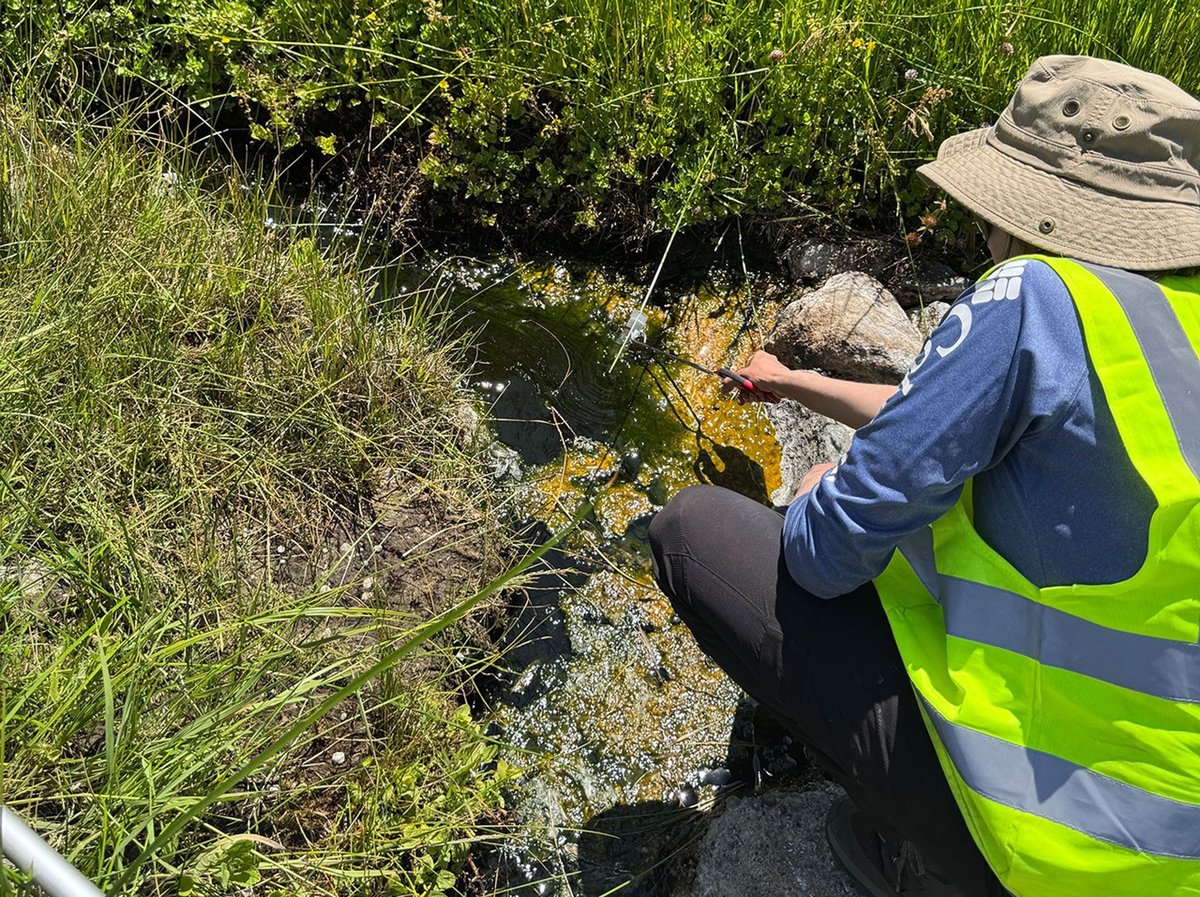
Scientists supported by NASA discovered an amoeba in California's Lassen Volcanic National Park that can reproduce at 145 degrees Fahrenheit, breaking the previous temperature record for complex life by 5 degrees. The organism, Incendiamoeba cascadensis or the fire amoeba, was found in the park's heated waters and can remain active and mobile searching for food at temperatures up to 147 degrees Fahrenheit, according to research published in Cell.
The discovery challenges long-held assumptions about the limits of eukaryotic life—complex organisms with nuclei and specialized internal structures, ranging from algae to fungi to animals. Scientists had believed that the delicate components inside these cells would break down above 144 degrees Fahrenheit. The previous record for eukaryotes was held by a few species of fungi and red algae at 140 degrees.
"In part, studies on eukaryotes may have been limited because of assumptions about membrane stability," said Beryl Rappaport, a graduate student at Syracuse University and the study's lead author. "We are hoping that the discovery of I. cascadensis encourages others to keep searching for high temperature eukaryotes."
The researchers sequenced the amoeba's genome and examined which genes were active at different temperatures. They identified genes that help the organism stabilize its DNA and protect it from heat damage, and others that maintain protein folding at extreme temperatures. Some of these mechanisms appear similar to strategies used by heat-loving bacteria and archaea.
The findings may inform the search for life on other worlds. Astrobiologists study extreme organisms to understand what environmental conditions might support life beyond Earth. The research also shows that extremophiles produce unique proteins with potential applications in biotechnology and medicine.