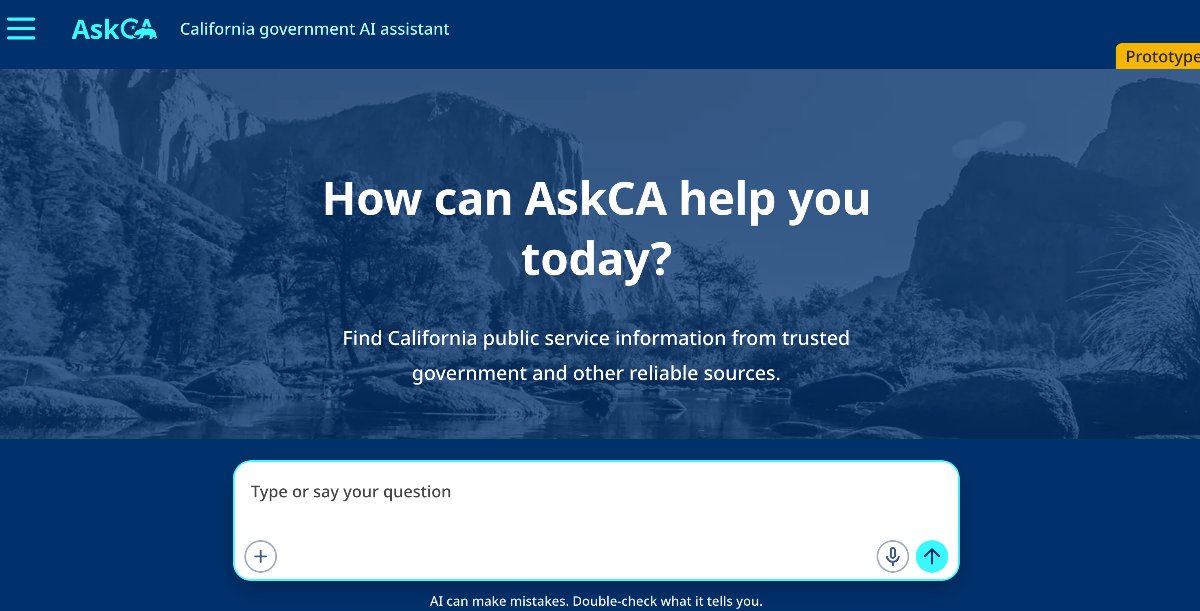
California has introduced AskCA, an AI-powered digital assistant designed to simplify how residents navigate state and local government services, Governor Gavin Newsom announced Friday.
The tool, developed by the state's Office of Data and Innovation, uses artificial intelligence to guide users through state services based on life events such as finding a job, starting a business, managing family services, and disaster recovery. The prototype was built in response to the January 2025 Los Angeles wildfires and has been tested with fire recovery leaders, job seekers, and more than 100 general users.
Beginning today, California residents 18 and older are invited to sign up as beta testers through ask.ca.gov to help refine the tool. "Californians should not have to understand how government is organized just to get basic help," said Director Jeff Marino of the Office of Data and Innovation. Subject matter experts from across state government are helping to ensure responses are backed by verified sources rather than relying on unverified AI outputs.
The California Department of Human Resources will be the first state agency to deploy AskCA in a live public service. Starting September 30, CalHR will use the tool on CalCareers.ca.gov to help job seekers understand how their work experience aligns with state job classifications through a resume-upload feature. The tool does not store personal information or require a CalCareers account, the state said.
AskCA was built by the Office of Data and Innovation in collaboration with Anthropic, which also provides strategic guidance and technical assistance. Project partners include U.S. Digital Response, Stanford's RegLab, and the nonprofit 211, which works to connect people with social services.