A screenshot lands in the family group chat. A headline goes viral before breakfast. Before you share it, or argue with the person who did, there is a question worth asking first: has someone already checked this?
For most claims that spread widely, the answer is yes. Professional fact-checkers such as AFP, Reuters, PolitiFact, FactCheck.org, Snopes and the U.K.'s Full Fact publish detailed reviews of viral claims every day. The hard part is not the checking. It is finding the check.
Fact-checks are published in a format machines can find
Many fact-checking organizations tag their reviews with a standard piece of markup called ClaimReview. It records the claim, who made it, who reviewed it and the verdict, whether "False," "Misleading" or "True." Google collects these tags from publishers around the world and makes them searchable in its Fact Check Tools.
That shared format is what makes quick lookups possible. Several free sites search it, including Google's own Fact Check Explorer. This article looks at one of them, FAXTR, which pairs the lookup with an archive and a tool for comparing news coverage across countries.
How the lookup works
On FAXTR's AI Check page, you paste a claim or a headline into a box and press Analyze. The tool searches for published fact-checks that match and returns the verdict along with the name of the organization that reviewed it.
We tested it with an old favorite of the misinformation world: "5G networks spread COVID-19." The result came back in a few seconds, marked False, with the explanation that the claim had been reviewed by AFP Fact Check.
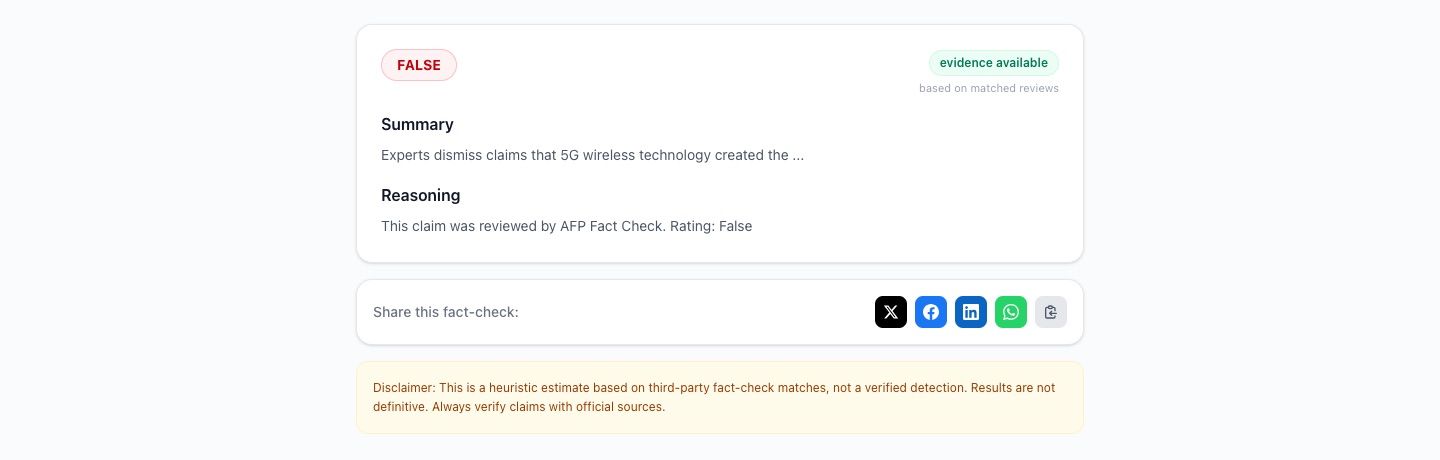
Two things are worth understanding about that result.
- It is a lookup, not a judgment. Despite the "AI" label on the page, the verdict is AFP's, not the tool's. FAXTR describes itself as "an evidence collector, not a judge," and the result page carries a disclaimer saying the output is based on third-party fact-check matches.
- No match does not mean true. If nobody has reviewed a claim yet, which is common for brand-new rumors, there is nothing to find. An empty result means "not checked yet," not "safe to share."
The lookup is free for three checks without an account, and five with a free account.
Browsing what has already been checked
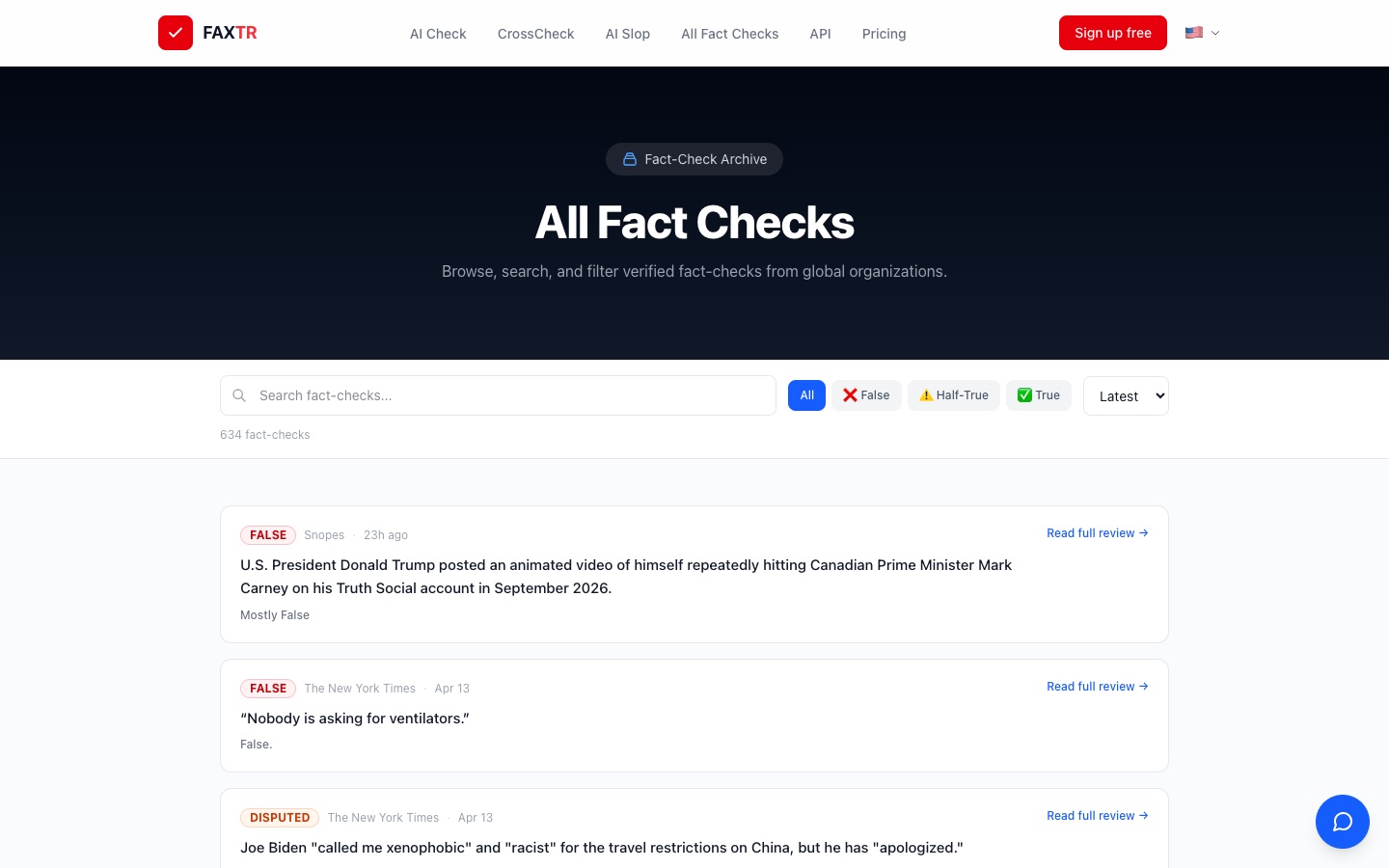
FAXTR also keeps an archive of fact-checks it has collected. On September 10 it held 634 entries from 59 different fact-checking publishers. It can be searched by keyword and filtered by verdict (False, Half-True or True), and every entry links to the original publisher's full review.
The archive is most useful when a claim keeps coming back in slightly different words. Searching a keyword such as "vaccine" or "election" surfaces related reviews that an exact-phrase search might miss.
Comparing how countries cover the same story
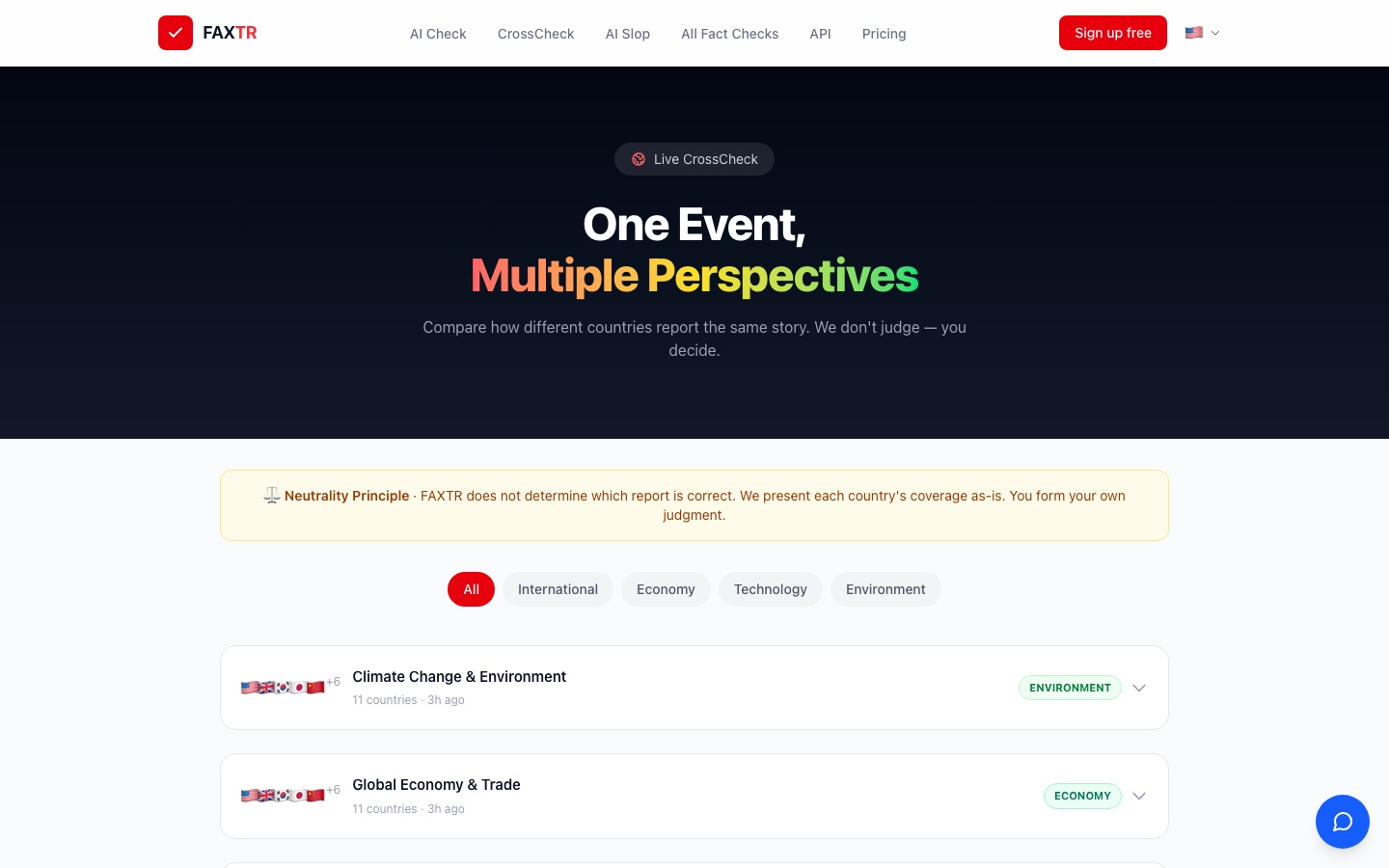
A separate feature, CrossCheck, places news headlines from 11 countries side by side on a handful of running topics, such as climate and the global economy. It is not a fact-check. The page states that it "does not determine which report is correct." But seeing how the same event is framed in Washington, London, Seoul and Tokyo can be a quick way to notice when one version of a story is missing important context.
When there is no fact-check yet
For claims that are too new to have been reviewed, the old habits still work best:
- Find the original source. A screenshot of a headline is not a headline. Search for the story on the outlet's own website.
- Check the date. Old stories often recirculate as if they were new.
- Run a reverse image search. Photos are frequently real but taken from a different place or year.
- Look for a second, independent report. Real news of any size is rarely reported by only one source.
- Wait a day. If a claim is important and false, a professional fact-check often appears within 24 to 48 hours.
The bottom line
The fastest way to deal with a viral claim is usually not to investigate it yourself, but to find the professional who already did. A lookup tool turns that into a few seconds of work. Just remember what you are reading: someone else's verdict, with a link to their evidence, and nothing at all when a rumor is too new to have been checked.