Discover the cosmosEach day a different image or photograph of our fascinating universe is featured, along with a brief explanation written by a professional astronomer.
Explanation:At the latitude of ESO’sParanal Observatoryin Chile, about 25 degrees south, Earth’srotation moves the planet’s surface eastward at over 1,500 kilometers per hour.
And while that’s faster than thespeed of soundat sea level, the motion isimperceptible.
Still, that motion can be revealed in theapparent rotationof the night sky byphotographingstar trails.
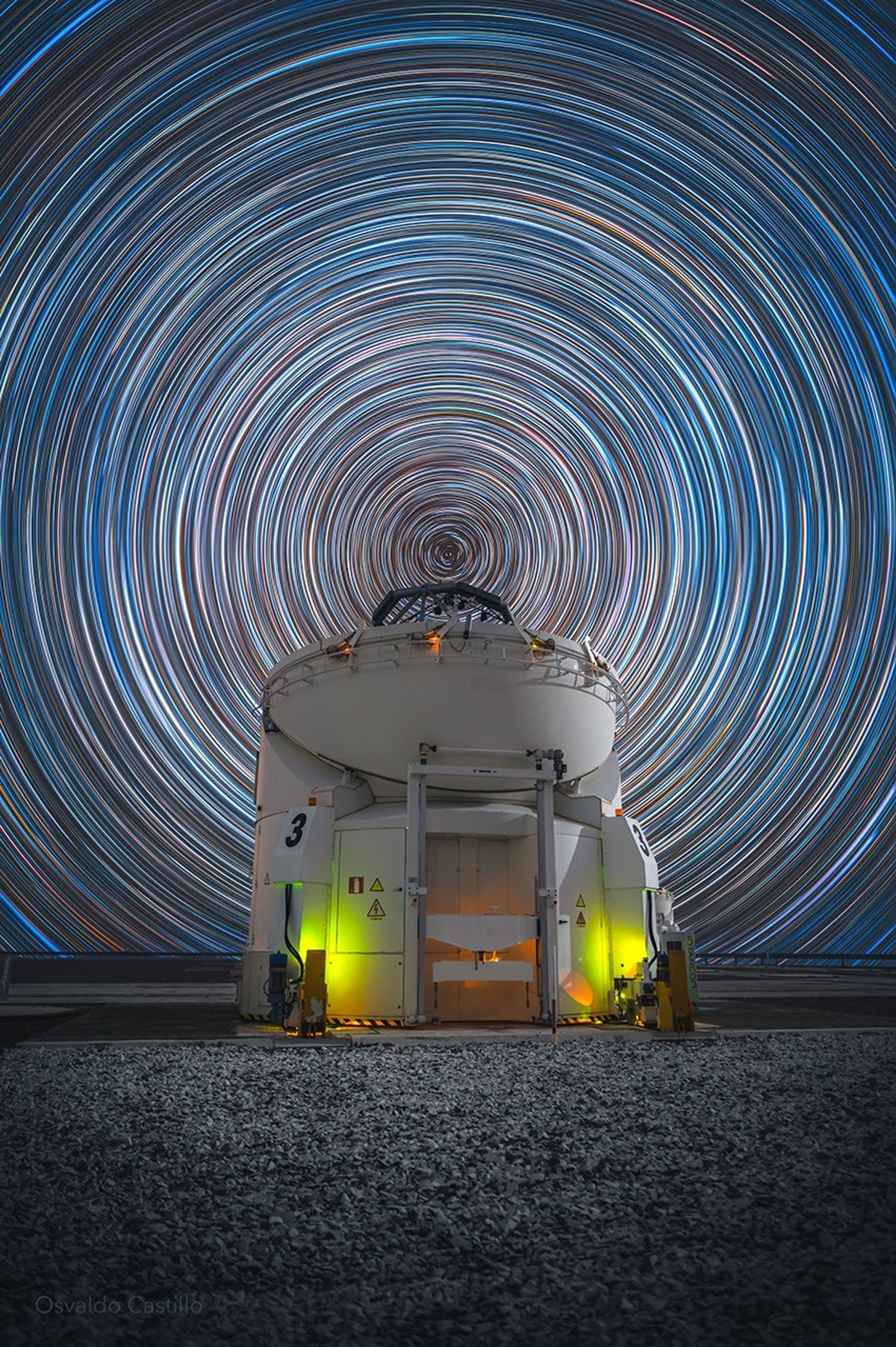
This star trail image was composed from a digital stack of 300 consecutive 25-second exposures made with a camera fixed to a tripod to trace the star trail arcs.
The graceful arcs are concentric and centered at the southcelestial pole, the southern hemisphere extension of Earth’s axis of rotation into space.
One of the observatory’s operating 1.8 meter auxiliary telescopes,AT 3, appears beneath the south celestial pole, faintly illuminated in the foreground of this well-planned scene from a rotating planet.
APOD’s main NASA site ismoving:Fromapod.nasa.govtoscience.nasa.gov/apod
Tomorrow’s picture:pixels in space