Discover the cosmosEach day a different image or photograph of our fascinating universe is featured, along with a brief explanation written by a professional astronomer.
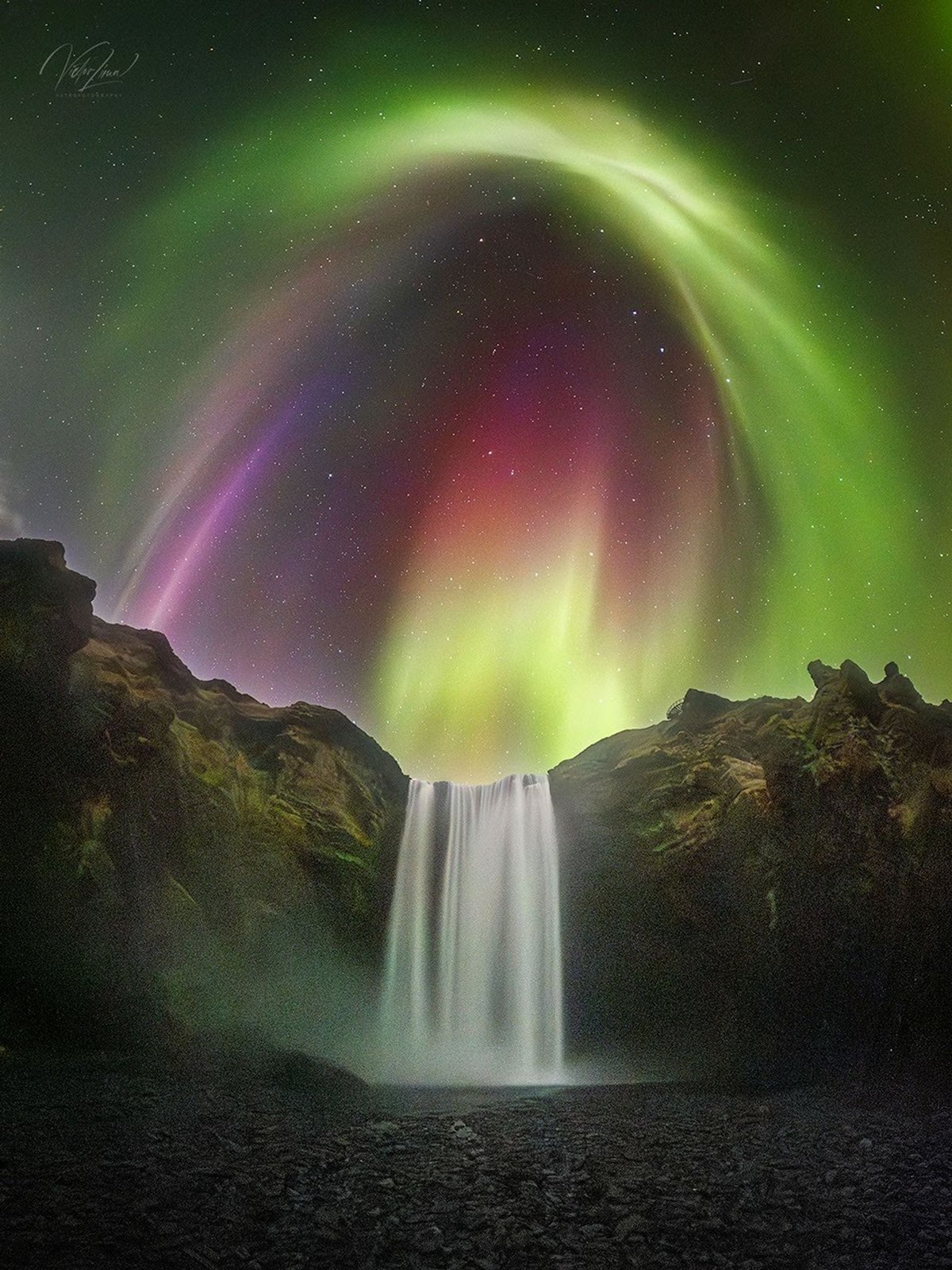
Explanation:What a sight to behold, when a night sky became filled with colors that appeared to rain over the Skógafoss waterfall in Iceland.
This image was taken in a single5 second exposureby the photographer in April 2025.
Seeing anaurorais on many people’s bucket lists.
But it is not easy.
It requires highsolar activity, dark and clear skies, and usually a viewing location at high latitude.
That makes the northern lights more easily seen than the correspondingsouthern lights, simply because there is less landmass in the Southern Hemisphere, especiallyaround the Antarctic Circle.
Auroras are caused by charged particles from thesolar windthat are captured by the Earth’smagnetosphereand guided by the magnetic field to a region close to one of the poles, where they collide with gas particles in theatmosphere.
Different colors indicate interactions with different gases atdifferent altitudes, like oxygen and nitrogen.
APOD’s main NASA site ismoving: Fromapod.nasa.govtoscience.nasa.gov/apod Tomorrow’s picture:What’s next?